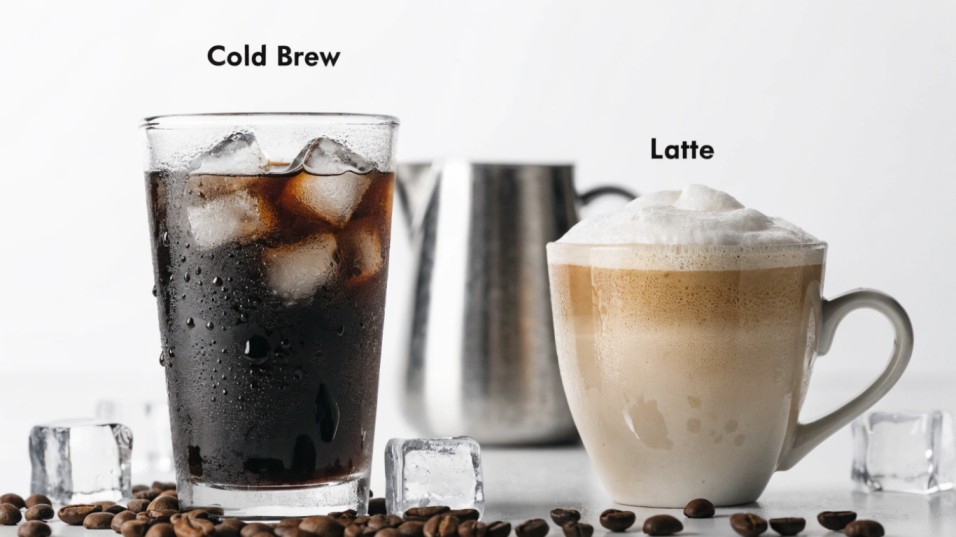
Coffee lovers often debate between cold brew vs latte. Both beverages are distinct and cater to different preferences and occasions. Cold brew feels smooth, low-acid, and very refreshing, perfect for a hot day. Latte is creamy, comforting, and espresso-based, a drink enjoyed slowly while reading. This guide helps understand how each one tastes and feels.
Cold Brew vs Latte: What’s the Difference?
Latte vs cold brew are both popular coffee choices, but they differ a lot in the latte vs cold brew comparison. Cold brew has a smooth flavor and less caffeine content. Latte is creamy and rich because of milk. Cold brew uses water slowly.
Latte uses hot espresso shots. Their serving style also significantly differ. A detailed breakdown shows that cold brew is easy to sip slowly, and latte feels smooth in the mouth. Each works for different moods and times of the day.
Extraction Process and Brewing Time

These drinks show how coffee is made in a different way. These choices are fundamentally unique in texture, impacting their taste and overall experience.
The way the coffee is made changes their flavor and feel. Small differences in these drinks create a big change in coffee taste and experience.
Cold Brew:
Cold brew uses coarsely ground coffee beans. The beans sit in room-temperature water. They stay there for 12 to 24 hours. This makes smooth and tasty coffee. Cold brew uses no heat. The coffee extracts slowly. This makes it sweet and smooth.
The taste is gentle and nice. The drink is very strong. People mix it with water or milk before drinking. The calm taste makes mornings smooth and rich without being too strong.
Latte:
A Latte is prepared in under 5 minutes. A high-pressure machine is used to extract a single or double shot of espresso. The heat and pressure extraction bring out bold, aromatic flavors.
This espresso is then combined with steamed milk and a light foam layer. The flavors blend well, and the milk is soft and creamy. Using this method, create a drink that is smooth, warm, and rich, making every sip a delight.
Key Takeaway:
Cold brew takes patience and slowly rewards with a smooth, naturally sweet coffee. Lattes are made quickly and rely on fresh, hot extraction for a balanced taste. Some days call for calm and slow, other days for quick and warm flavors.
Flavor Profile and Acidity

Cold Brew:
Cold brew tastes very smooth and mellow. Studies show that it is naturally less acidic than hot coffee. The slow steeping brings a chocolatey taste with floral and nutty notes.
Good beans are used to make it tasty. The drink tastes soft and smooth. Water keeps it gentle. Warm mornings feel nice with this drink. Hot beverages are strong, but this one is calm and easy to enjoy.
Latte:
The steaming process enhances the milk’s natural sweetness in a latte. It feels creamy and rich, with a slightly caramel-like touch.
Espresso provides a bold, roasted, and bitter coffee flavor that is mellowed by the milk. The result is a balanced, smooth, and lightly sweetened drink with a velvety texture. Every sip brings a warm, comforting taste.
Key Takeaway:
If you prefer a cold drink, brew coffee slowly. It is ideal for a naturally sweeter taste and is low-acid, so the stomach feels good. Lattes offer a well-rounded mix of espresso intensity and creamy sweetness.
When comparing cold brew vs iced latte, morning coffee tastes great. It is gentle and strong at the same time. It balances the flavors perfectly.
Chemical Composition
Cold Brew:
Cold brew research indicates it has a higher pH and is less acidic than espresso or hot-brewed coffee. Darker roast beans reduce acidity.
They make coffee bold and smooth. The taste is chocolatey and nutty. The drink feels gentle on the stomach but still full of taste.
Latte:
A latte is rich and creamy. Steamed milk has lactose, natural sugar, proteins, and fats. It mixes with espresso at high heat. This makes nice smells and a rich, strong flavor.
The acidity is balanced by the milk, giving a smooth, creamy, full-bodied drink. Lattes feel warm, soft, and strong at the same time.
Color and Appearance
Cold Brew:
Cold brew has a reddish-brown hue that looks darker yet transparent, unlike regular coffee. The slow extraction process makes it smooth.
Served over ice, it appears clearer and refined, not like traditional iced coffee. When mixed with milk or cream, it shows a tan or light brown shade that feels soft and gentle.
Latte:
Skilled baristas create a latte with steamed milk. The milk is creamy and light brown. Its appearance is smooth. The foam on top is topped with a soft layer of microfoam. The latte art shows a nice texture.
The consistency is thicker than cold brew. Another layer of microfoam floats on the milk. The creamy brown foam adds a lovely texture. Skilled baristas topped the cup and created beautiful latte art every time.
Read our guide on Macchiato vs Latte. Learn the key differences in flavor, milk, and caffeine.
How to Make Cold Brew & Latte at Home
Cold Brew Recipe

Ingredients:
- 100g coarse coffee
- 1 liter cold filtered water
- Ice cubes
- Milk (if you like)
Steps:
- Put the coffee and water in a jar or French press.
- Let it sit in the fridge for 12–24 hours.
- Strain the coffee through a filter or fine sieve.
- Pour over ice. Add milk if you like.
Tips:
- Use fresh coffee for the best taste.
- You can steep longer for stronger coffee or shorter for lighter coffee.
- Keep it in a closed container in the fridge for up to a week.
Classic Latte Recipe

Ingredients:
- 1 shot of espresso
- 180ml steamed milk
- Light milk foam
Steps:
- Brew a rich espresso.
- Steam the milk until it is warm and creamy (60–65°C / 140–150°F).
- Pour the milk over the espresso. Keep the foam on top.
- Make latte art if you like.
Which One is Stronger?

When choosing coffee, it is important to consider two main aspects. It comes down to strength and flavor intensity. Some people like a soft taste, but the caffeine content matters too.
When energy is needed, there are two things to check in a latte vs cold brew comparison. The flavor in a latte is smooth, while cold brew has more strength. The choice depends when a boost or a mild drink is wanted.
Cold Brew:
- Caffeine Strength: Cold brew uses more coffee and steeps for a long time (12–24 hours). It has more caffeine than a latte.
- Flavor: Cold brew tastes smooth and sweet. It has low acidity. People enjoy it easily.
- Caffeine Amount: One 8oz cup has 100–200mg of caffeine. Strong cold brew can have even more than an espresso shot.
Latte:
- Caffeine Strength: A latte has one or more shots of espresso. Each shot has about 63mg of caffeine. You can add extra shots to make it stronger.
- Flavor: Lattes have a lot of milk, so they taste smooth and creamy. The milk makes the espresso taste soft and nice.
- Caffeine Amount: A single-shot latte has 63mg of caffeine. A double-shot latte has 126mg. You can make it stronger by adding more shots.
Frequently Asked Questions About Cold Brew vs Latte
1. Which is better for a refreshing summer drink?
Answer: Cold brew is the best choice for hot weather. The drink stays chilled and has a smooth taste. Its low acidity makes it very easy to drink over ice. On sunny days, this drink feels refreshing and gentle, perfect for a summer treat.
2. Can I make cold brew with any coffee beans?
Answer: Cold brew can be made with any coffee beans, but medium or dark roasts work best. They create a rich, chocolatey, and smooth flavor.
It does not have too much acidity. Yes, this makes a tasty drink. However, light roasts may taste weak. Choosing the right beans really makes a difference.
3. Can I use plant-based milk for a latte?
Answer: Making a latte with plant-based milk is easy and tasty. Oat milk has the creamiest texture and is close to dairy milk. Almond milk is light and has a slightly nutty flavor.
Soy milk is smooth and high in protein. Coconut milk adds a tropical sweetness that makes the drink special. Different plant-based milks change the taste, giving a new experience with every cup.