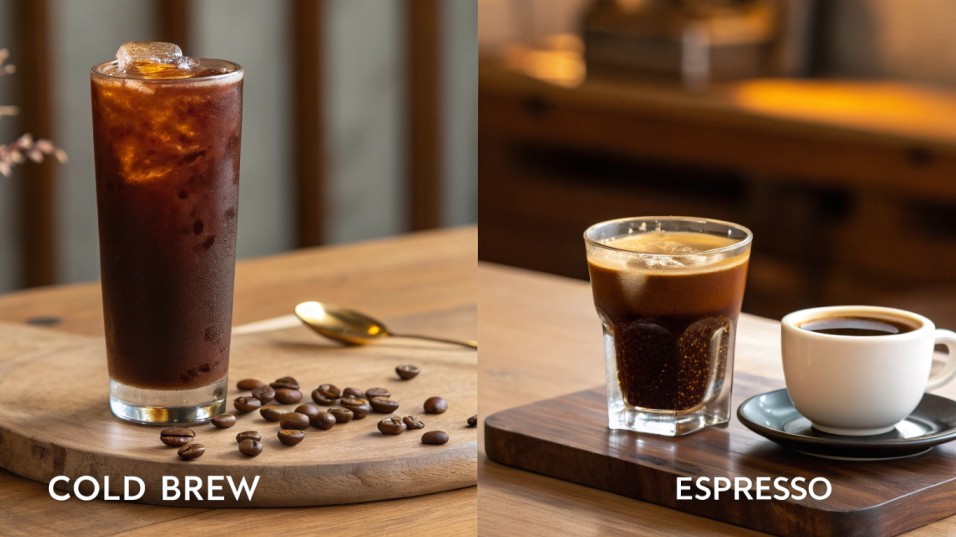
What really sets apart these two brews? Both drinks carry a rich history and shape how people enjoy coffee around the world. When comparing cold brew vs espresso, each has a special story.
Espresso helped sailors on long sea trips. It kept them awake and alert every day. The other became a daily staple in Italy and grew into one of the most popular brewing methods loved by many.
What is Cold Brew?

Many people enjoy Cold brew for its calm taste and deep body. This drink uses a slow extraction process to make a rich coffee concentrate. It does not need hot water. Cool water slowly pulls flavor from the beans.
The process does not take seconds like espresso. It takes long hours, not quick minutes. At coffee shops, people use fancy glass towers and cool gadgets. At home, a simple jar or a French press works great.
Fresh coffee can steep in water, and the steeping builds taste over time. After that, people filter the grounds. The coffee is smooth and bold. It is strong and full of flavor. Anyone can drink it plain. Extra water can make it lighter.
How to Make Cold Brew at Home (Step by Step)
Step 1: Pick the Right Ratio
Use 1 part coarse coffee and 5 parts filtered water. This mix makes a strong cold brew. It has bold flavor and a smooth body.
Step 2: Use Quality Water
Coffee is mostly water. Good water makes coffee taste better. Use filtered water for a clean flavor. Fresh water keeps the coffee’s natural flavor and aroma.
Step 3: Grind Your Coffee Beans
Use a coarse grind. It should feel like breadcrumbs, not fine powder. A coarse grind makes coffee smooth and balanced. It keeps the drink clear and tasty.
Step 4: Steep the Coffee
Add the ground coffee to your cold brew maker, mason jar, or French press. Pour in water and stir gently. Let it steep for 12–18 hours at room temperature. This makes full flavor and a rich coffee concentrate.
Step 5: Filter and Strain
After steeping, strain the coffee grounds. Use a French press plunger, cheesecloth, or fine mesh strainer. This makes the cold brew concentrate smooth. Now it is ready to dilute and serve.
Pro Tips on Coffee Beans
For cold brew, always use whole beans because grind size really matters. Dark roast, light roast, or medium roast all work if flavor is preferred. Blends and 100% Arabica are both fine, but pre-ground coffee for drip makers is too fine for cold brew.
Coarse grind is best. Beans can be bought and ground at home, or ask a local coffee shop to grind any bean type for you. That’s what works here, and it really matters to get it right. Experiment to see which beans and grind are liked most.
Why Do People Love Cold Brew?
Many people are looking for a coffee that feels easy on the palate. Cold brew at a local shop or made in the kitchen uses cold water to pull compounds slowly and does not create too much acidity or bitterness.
The flavor is smoother, gentler, and less sharp than hot espresso. Each cup is incredibly drinkable. It is worth trying. Can grab it quickly or take it easy at home.
The whole experience gives a new way to enjoy coffee. This is an easy way to feel a fresh, soft taste every time.
How to Drink Cold Brew

Cold brew tastes best straight over ice. You can pour the concentrate into a glass and dilute it with water for a smooth, classic flavor. Milk or a plant-based alternative adds extra creaminess.
Sweeten with sugar, honey, or a splash of cream. Flavored syrups and seasonal twists turn something ordinary into new and fun. Each experiment makes coffee real and exciting.
You goes beyond the usual coffee and find something entirely yours, with or without frills. Here are some ways we make our drive-thru better:
1. Cherry Cola Cold Brew
A refreshing drink. Deep black cold brew mixes with cherry and amaretto syrup. It feels like a classic soda shop with a coffee twist.
2. Choc-Mac Brew
Perfect for dairy-free fans. Cold brew mixes with chocolate-macadamia syrup. Top it with creamy macadamia milk. Nutty, rich, and silky smooth.
3. Triple C Cold Brew
Cold brew with caramel syrup is delicious. It has salted caramel foam on top. A drizzle of caramel finishes it. Sweet and salty, it tastes amazing.
4. Protein Cold Brew
Cold coffee becomes fuel. We add vanilla protein cold foam. Each serving has 10 grams. Enjoy your favorite cold brew with extra protein. It tastes delicious.
What is Espresso?

Making espresso at home requires a precise brewing method. Hot water passes through finely ground coffee under high pressure. The grind must be finer than drip or French press, almost like table salt in texture.
Medium roasted beans or dark roasted beans make a strong, bold coffee. They create a small, rich shot in a tiny cup. The powerful cup has a golden crema on top. The machine changes the coffee. The grind size matters.
Water temperature is important. Tamping pressure affects the shot. All of these make the coffee taste great. Practice, skill, and time are needed to master the process. Cold brew is more forgiving, but espresso offers intense flavor.
How to Make Espresso at Home (Step by Step)
Step 1: Choose Your Beans
Choose medium or dark roast beans for the classic espresso flavor. Single-origin beans and blends both work. Darker roasts make the crema and full body stronger.
Step 2: Grind Fine
Use a very fine grind for espresso. A coarse grind makes water flow fast and the flavor light. A too fine grind gives strong taste and keeps the machine working well.
Step 3: Measure and Dose
Use 7–9 grams of coffee for one shot. A digital scale helps keep it precise. It makes every shot perfect.
Step 4: Tamp Evenly
Put the grounds evenly in the portafilter. Press them down with firm and steady pressure. Make a flat and compact surface. This helps water flow evenly through the coffee.
Step 5: Pull the Shot
Lock the portafilter into the espresso machine. Start the extraction. A good shot takes 25–30 seconds. It makes a rich crema on top.
Step 6: Serve and Enjoy
Espresso tastes best when fresh. Serve it right away. Enjoy the strong flavor and nice smell.
How to Enjoy Espresso?

Espresso has a bold and intense flavor. It is the backbone of modern coffee culture. Many people start their morning with a straight shot. That instant caffeine kick wakes you up fast. The magic of espresso is its versatility.
A small coffee base makes many drinks. It can make lattes, cappuccinos, macchiatos, flat whites, Americanos, or iced coffees. The list of espresso variation is long. Each fits different tastes.
Espresso is the standard worldwide. Millions of people love espresso. They drink it every day. It can be a quick shot at an Italian bar. It can also be a fancy coffeehouse creation.
Read our guide on types of lattes. Find classic lattes, flavored lattes, iced lattes, and special lattes. Pick the best one for your coffee taste.
Cold Brew vs Espresso – Key Differences
Espresso vs cold brew are very different. They taste different and are made in different ways. Cold brew is slow and smooth. Espresso is fast and strong. Here are the main differences:
| Category | Cold Brew | Espresso |
|---|---|---|
| Beans used | Any roast works: light, medium, dark, blends, or 100% Arabica. | Usually medium to dark roast for rich flavor and crema. |
| Ease of home preparation | Beginner-friendly, easy to make in batches. | Needs practice, skill, and fine-tuning. |
| Equipment needed | Jar, French press, or cold brew kit. | Espresso machine, grinder, and tamper. |
| Serving style | Serve over ice, dilute with water, or add milk/syrups. | Serve as a shot or use as a base for lattes, cappuccinos, macchiatos. |
| Flavor profile | Smooth, sweet, low acidity, mild bitterness. | Bold, strong, concentrated, with crema. |
| Brewing method | Steep coffee slowly in cold or room-temperature water for 12–18 hours. | Force hot water through finely ground coffee under high pressure. |
| Grind size | Very coarse, like breadcrumbs. | Very fine, like table salt. |
Cold Brew vs Espresso Caffeine
Cold brew vs espresso caffeine are popular drinks. At first glance, cold brew caffeine seems lower, but a 16-ounce cup of cold brew averages about 180-200 mg of caffeine. A single shot of espresso, just 1 ounce, delivers around 60-65 mg of espresso caffeine.
If it is broken ounce for ounce, cold brew has about 12-13 mg per ounce, while espresso gives 60+ mg per ounce. Cold brew caffeine vs espresso shows that espresso has more caffeine. It is strong and powerful.
One sip shows its power. Cold brew has more total caffeine in a serving, made for sipping slowly over time. Its sharp kick is gentler, spread in a larger volume, perfect for a long cup. The drink averages strength yet lets anyone sip and enjoy their day.
Shaken Espresso vs Cold Brew

Cold brew is brewed cold and has low acidity with a gentle flavor profile.It tastes smooth and light. The coffee feels calm and easy on the tongue. Shaken espresso is fun to make. Espresso shots go into a cocktail shaker with ice and a bit of syrup.
The shaking chills the drink fast and adds foam and a frothy texture. This method blends the sweetness with recognizable espresso flavors, making it creamy yet lively. Cold brew is gentle, while shaken espresso is bold but smoother with ice and foam.
FAQ About Cold Brew vs Espresso
1. Is cold brew stronger than espresso?
Answer: Cold brew or espresso can feel stronger, but it depends on how strong is measured. A single cup of cold brew usually comes in larger servings and has much total caffeine.
By volume, espresso is much stronger. Cold brew works well when a big cup is needed to last longer. Espresso gives a quick strong boost. Both give energy, but the feeling is different.
2. Does cold brew taste less bitter than espresso?
Answer: Cold brew is prepared without hot water. This means it has fewer acidic compounds. These compounds make the drink bitter.
Yes, cold brew has a smoother taste than espresso. Flavors flow gently into the mouth with each sip. Espresso is strong and bold, while cold brew feels calm and soft.
3. Why does espresso have crema and cold brew doesn’t?
Answer: In espresso, a golden crema appears on top. This happens when hot water is forced through finely ground coffee at high pressure. The pressure makes bubbles and oils mix, and crema forms at the end.
Cold brew never uses pressure or hot water, so it doesn’t get the frothy top. Cold brew is smooth and gentle, while espresso is strong and full of flavor. Brewing methods change both the taste and the look of the coffee.